Moura Dubeux stands out in real estate sector and soars on the stock market
The company became open capital in 2020, just before a long draught of IPOs in the Brazilian stock market
:format(webp))
Diego Villar, CEO of Moura Dubeux: “In nine months, the company did more than in any other year in its history” (Leandro Fonseca /Exame)

:format(webp))
Repórter de Mercados
Publicado em 5 de dezembro de 2025 às 16h58.
Última atualização em 5 de dezembro de 2025 às 17h00.
One of the companies that appreciated the most in the Brazilian stock market this year is from Northeast– and makes a point of not leaving there. The stocks of the Moura Dubeux real estate developer have skyrocketed since the IPO made in February 2020.
This year alone, they jumped 194%, becoming the third most appreciated company in the B3 index wallets. It is also the only real estate developer in the top 5.
While their shares shoot up in the stock market, Moura Dubeux seeks to live up to the prestige it earned from investors. This year, they reached a new standard, says the company’s executive board, aided by the results gathered throughout 2025.
“In nine months alone, the company has profited more than in any other year in our history”, says Diego Villar, CEO of Moura Dubeux. It was a generalized improvement in sales, new launches, profits, revenue, margins, and better return on assets. The company basically doubled the size of its operations in two years, becoming a company worth 4 billion reais.
The company has no formal guidance, but, based on the year’s performance so far, the CEO takes a much greater profit than in 2024 for granted. In the first three quarters of this year alone, the number has already surpassed 300 million reais. The real estate sector is strengthening in the Northeast, with rising demand not only for new houses but also for used properties, as shown by FipeZAP data, as detailed in this edition.
In the housing market, some see Moura Dubeux with potential to explore the big capitals in the Southeast region. But the company ensures that its ambitions differ: to make Northeaset an alternative economic hub to great urban centers.

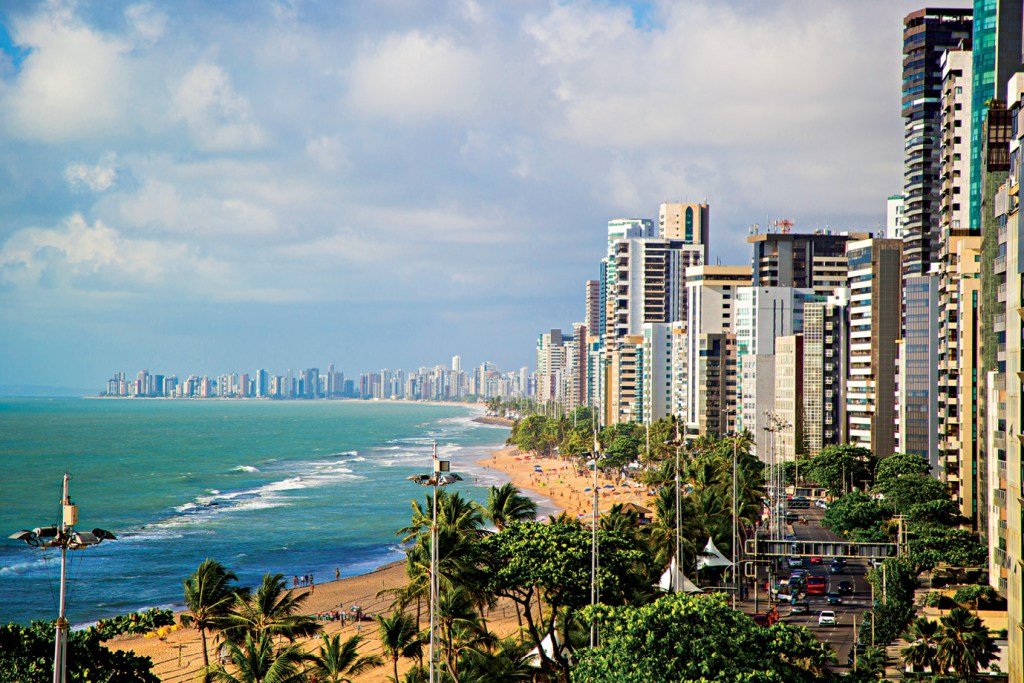
Boa Viagem Avenue: With the creation of Moura Dubeux, the partners decided to explore Recife's most prestigious area. The developer has built more than 40 projects on the avenue (Dircinha S Welter/Getty Images) (Dircinha S Welter/Getty Images)
To do that, the company will have to overcome an old challenge: the persistent lack of talent, most of whom migrate south, especially to São Paulo, in search of references and better opportunities.
“This is evidenced by the fact that many ITA [Technology and Aviation Institute] admissions come from Ceará, but stay in São Paulo due to the lack of big companies that hire these talents”, argues the CEO. MD is focused on reversing this logic, potentially promoting a northeastern drive.
One of the factors that makes this plan likely is the strong presence of Moura Dubeux in seven of the nine states that comprise the region. To stay relevant, the company turned to the middle and upper classes, launched new brands in the economic sector, and developed estates that fit into the public housing program Minha Casa, Minha Vida (MCMV).
A more recent addition, Un1ca was born focused specifically on faixa 3, a designation for the program that serves families with a monthly income between 4.700,01 and 8.00 reais. Mood will service families with an income between 12.000 and 15.000 reais, which, so far, were not eligible for the program – but after recent changes, specifically in faixa 4, they can now be a part of it.
In September, MD further increased exposure to the economic sector by establishing a joint venture with Direcional, an active participant in the housing program since the beginning.
Specialists saw the partnership between the two developers as a win-win: MD opens the way for Direcional in the northeastern market, while Direcional adds its vast experience with MCMV, especially in faixas 3 and 4.
Nordeste thus gains a relevant role in the strategy of the Minas Gerais construction company. The region is a focus of 15% of Direcional’s launches this year, and the goal is to reach 25% of the company’s operations eventually.
“We have a very big opportunity right now. It is a region with a considerable housing deficit and high demand, with MCMV able to serve even more of the region’s population. And the influence that MD has over there drastically accelerates this kind of growth”, says Ricardo Gontijo, Direcional’s CEO.
Demand grows in the Northeast
The partnership was made at an opportune moment: Northeast has been playing a leading role in the housing program since the region began to utilize the designated investments fully.
This is reverting to the historical pattern of resource under-utilization previously observed. This also happens because of changes in the housing program itself, which increased access to financing: an increase in the value ceiling for estates, more generous subsidizing (up to 55.000 reais), and an increase in the financing term to 35 years.
Lower-income families have gained access to financing that they previously couldn’t access. Nordeste, despite being the region with the lowest average income in Brazil, also has the lowest tax rates for the program, which can drop to just 4%.
“Until 2022, a part of the resources that weren’t used in the North and Northeastern regions of Brazil used to be sent back to the South and Southeast. Now, if 5 billion reais arrive, 5 billion are spent, and the money is no longer sent back, because people started having conditions to be eligible for financing”, explains José Carlos Martins, president of the Consulting Council of the Brazilian Chamber of the Construction Industry (CBIC).
Martins was one of the creators of the Real Estate Demand Index (IDI) in Brazil, in a partnership between CBIC, Sienge Ecosystem, CV CRM, and Grupo Prospecta.
It is a strategic tool that measures and evaluates the attractiveness of 79 Brazilian cities in relation to real estate demands in varying price ranges. In the economic sector, five northeastern capitals are among the 10 cities with the highest real estate demand: Fortaleza (CE), Recife (PE), Salvador (BA), Aracaju (SE), and Maceió (AL).
“The market likely started to notice that the region’s population got MCMV financing and began launching business ventures. With the launch, sales increase, as do visits to sales stands, questions considered in the elaboration of the index.”
In medium- and high-tier residences, Nordeste also performed well. According to the specialist, the economic sector catalyzed other sectors. In the high tiers, Recife finished third; Fortaleza, fourth; and Salvador, seventh. On average, Salvador finished in fourth place, and Fortaleza in seventh.

Ricardo Gontijo, CEO of Direcional: the Northeast concentrates 15% of the company's launches this year, and the goal is to reach 25% of the operation in the future (Leandro Fonseca /Exame) (Leandro Fonseca /Exame)
Gated Communities in the DNA
Regardless of the sector, Moura Dubeux is ready to go full circle.
Founded in 1983 in Recife, the company grew to high standards through the entrepreneurial tact of three engineer brothers, Gustavo, Marcos, and Aluísio, who used to run a gas station. “They decided to buy land with some friends to build an estate in which to live. They charged their friends an administration tax for conducting the construction. In the end, what they really wanted was a good and cheap apartment”, tells Diego Villar.
The first venture was Morada de Apipucos, in a neighborhood of the same name, in Pernambuco’s capital. Gustavo and Aluísio actually went on to live there, but Marcos sold his apartment and more than tripled the money he invested in constructing it. The conclusion was obvious: this business was more profitable than the old gas station.
With Moura Dubeux thus founded, the associates decided to explore the noble region of Recife, Boa Viagem Avenue. It was a disruption. MD was able to negotiate significantly better prices for the neighborhood average by working in a model different from traditional real estate development: gated communities, in which residents directly pay for construction costs.
“This revolutionized the market at the time. After that, we built over 40 buildings there.”
Besides construction expenses, gated communities share responsibilities, with their own CNPJ and tracking of unpaid expenses. MD assumes the risk of defaults, guaranteeing the delivery of the works and eliminating the risk of contract cancellations.
The model became the company's primary business strategy. Over the years, the name Moura Dubeux began to be associated with quality estates.
Considering the brand’s strength, MD realized that it made no sense to remain confined to Recife. In the same period, developers from São Paulo were ranking among the stock market's top performers, seeking capital to expand throughout Brazil. They would easily reach the Northeast, and MD didn’t want to lag behind.
Until 2008, the company was funded by bank loans and managed to expand, but it had to deal with an explosion in labor costs.
When developers from other regions finally reached Nordeste, they brought São Paulo wages with them, and inflation peaked. At the time, MD made a partnership with MRV, focused on the economic sector. The collaboration lasted 10 years and ended only because MD chose to focus on medium- and high-tier segments.
Even alone, MRV stayed in Nordeste. But other traditional players decided to exit when turbulence in the national economy triggered a crisis of contract cancellations.
“We used to have a more resilient business model [in reference to gated communities], so we managed to survive. We weren’t all right, but we pulled through. In 2018, the economy started to grow again, tax rates were lower, and we had no other competitors in our region”, he recalls.
When the situation got better, demand became way larger than what Moura Dubeux could supply and, from then, the company could choose between two paths.
Through one of them, things would remain the same: The company wouldn’t cover market demands, but they also wouldn’t be able to grow. At the same time, they would keep paying elevated taxes on the loans they’d taken. The result would be almost zero profits. The second option seemed to make more sense: selling a slice of the company and raising money with no strings attached. Something that a listing on the stock market would allow.
A newcomer in the stock market
MD opened its capital at B3 in February 2020. The company raised around 1,25 billion reais. 90% of these resources were designated to paying off debts, which is usually not very well seen in the market, and the remaining 10% to reinforce assets and acquire new land.
The developer was part of an IPO harvest during the pandemic, when tax rates were low—the final before a draught of public offers which turned 4 years old in 2025.
The quick rise of MD’s shares since their debut is supported by a robust thesis, according to analysts.
What stands out to the market is their leading role in the Northeast, as the only company in the stock market that is fully exposed to the region.
Not for nothing, BTG Pactual, (from the same holding that owns EXAME), started to cover the company’s roles in September 2025, providing purchasing recommendations and a target price of 40 reais. For the bank’s analysts, regional experience gives the developer a competitive advantage, serving as a barrier to entry for new competitors.
The gated community model still offers resilience to the developer, generates positive cash flow since construction expenses are borne by clients themselves, and mitigates cost variations across communities.
This protects the company from unexpected losses and helps keep its leverage low, one of its strategic pillars. Diego Villar says that the company will not seek growth that compromises the maintenance of this leverage at low levels.
“We went from 800 million reais in sales in 2020 to over 3.5 billion by the end of 2025. We went from 1.000 employees to 8.000 employees. We expanded, but without leaving Nordeste and compromising our leverage, in an aggressive strategy to occupy the region. When outside developers noticed that the market here was making a comeback, we were already acting. When they were not yet here, we expanded the gated community model in every state we acted in”, affirms the CEO.

:format(webp))
:format(webp))
:format(webp))
:format(webp))

:format(webp))
:format(webp))
:format(webp))
:format(webp))